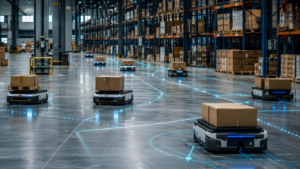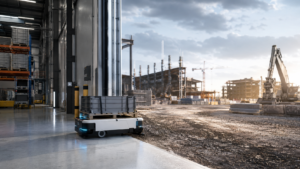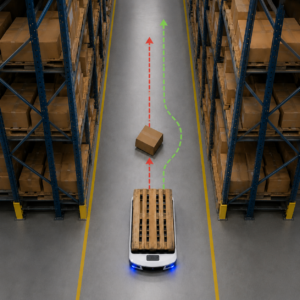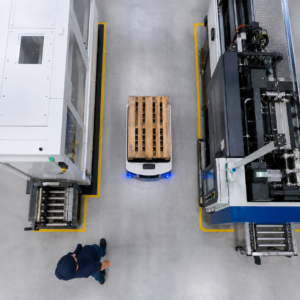
As warehouses, manufacturing facilities, and logistics operations become increasingly automated, companies are moving beyond the deployment of a single autonomous mobile robot.
Modern indusmentrial environts can operate with multiple Autonomous Mobile Robots (AMRs) working simultaneously across production lines, warehouses, loading areas, and internal logistics routes.
The challenge is no longer simply making one robot move autonomously. The real challenge is coordinating an entire robotic fleet so that every AMR receives the right task, follows the right route, avoids traffic conflicts, manages its battery efficiently, and contributes to the overall productivity of the operation.
This is where AMR Fleet Management becomes essential.
What Is AMR Fleet Management?
AMR Fleet Management is a centralized software system designed to monitor, coordinate, and optimize multiple autonomous mobile robots operating within the same facility or industrial environment.
Instead of controlling each robot separately, fleet management software provides a unified layer that connects the entire robotic fleet.
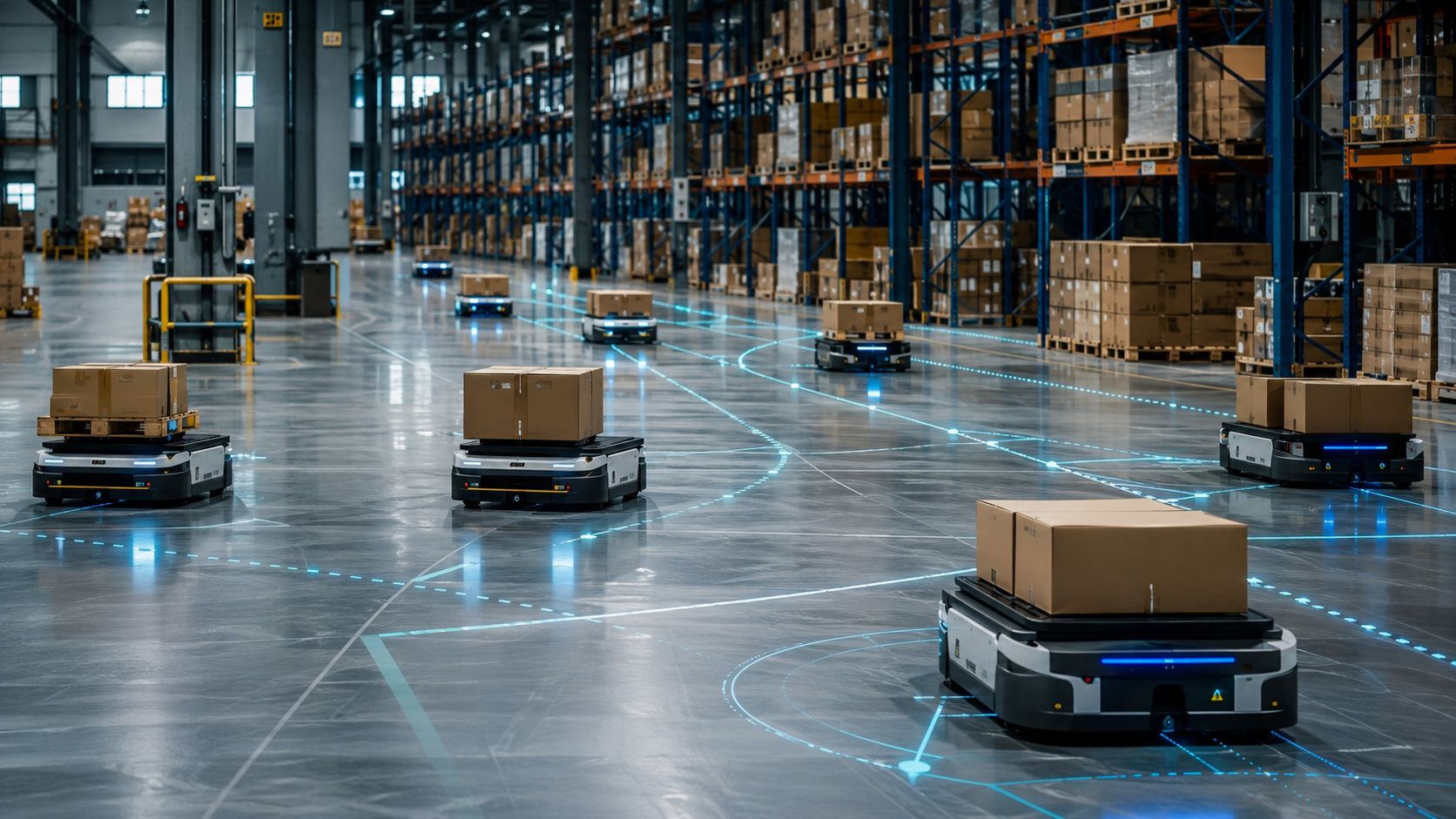 A modern fleet management platform can continuously monitor information such as:
- Robot location
- Current task status
- Battery level
- Robot availability
- Traffic conditions
- Navigation routes
- Charging status
- Task priority
- Operational alerts
- Fleet performance
By combining this information, the software can make intelligent decisions about how robots should move and which robot should perform each task.
Why Is Fleet Management Important?
Operating one autonomous robot is relatively straightforward. Operating ten, fifty, or potentially hundreds of robots within the same environment creates a completely different level of complexity.
Without intelligent coordination, multiple robots can create:
- Traffic congestion
- Route conflicts
- Long waiting times
- Charging station congestion
- Uneven robot workloads
- Unnecessary travel
- Reduced operational efficiency
Fleet management software transforms a group of individual robots into a coordinated automation system.
How Multiple AMRs Coordinate Tasks
One of the core responsibilities of fleet management software is intelligent task allocation.
When a new transportation or operational request is created, the system can evaluate the available robots and select the most suitable unit for the task.
The decision may consider:
- Distance between the robot and pickup location
- Current robot workload
- Battery charge level
- Robot payload capability
- Current traffic conditions
- Task urgency or priority
- Robot availability
- Expected travel time
For example, the robot physically closest to a pickup point may not always be the best choice.
If that robot has a low battery level or is already assigned to a high-priority task, the fleet management system can automatically assign another available robot instead.
This dynamic allocation reduces unnecessary waiting time and helps distribute the workload across the fleet.
Real-Time Traffic Management
Traffic management is one of the most important functions in environments where multiple AMRs operate simultaneously.
Robots may need to share:
- Narrow corridors
- Intersections
- Loading zones
- Elevators
- Production areas
- Charging stations
- Pickup and drop-off locations
If several robots attempt to use the same route or intersection at the same time, delays or deadlocks can occur.
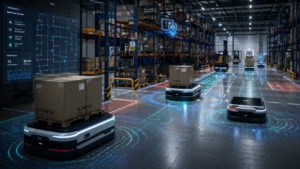
Fleet management software monitors robot movement in real time and coordinates access to shared areas.
The system can adjust robot priorities, temporarily stop one unit, reroute another robot, or control intersection access to maintain smooth traffic flow.
Collision and Conflict Prevention
Individual AMRs typically include onboard safety sensors and obstacle detection systems. However, fleet-level coordination adds another layer of operational awareness.
The fleet management system knows the planned routes and mission status of multiple robots simultaneously.
This allows the software to detect potential route conflicts before robots physically reach the same location.
Instead of waiting for two robots to encounter each other, the system can proactively adjust their routes or movement priorities.
Intelligent Route Optimization
The shortest route is not always the fastest route.
A direct path may already contain several robots, temporary obstacles, busy production areas, or restricted zones.
Advanced fleet management systems can continuously evaluate the operating environment and optimize routes according to real-time conditions.
The system may:
- Avoid congested areas
- Recalculate routes dynamically
- Reduce unnecessary travel distance
- Balance traffic across multiple routes
- Improve delivery times
- Reduce idle periods
This dynamic approach allows the fleet to respond to changing warehouse or manufacturing conditions throughout the day.
Battery and Charging Management
Battery management becomes increasingly important as the size of an AMR fleet grows.
If every robot begins charging at the same time, the facility may temporarily lose a significant portion of its automation capacity.
Fleet management software can continuously monitor battery levels and intelligently schedule charging.
The system may consider:
- Current battery percentage
- Future task demand
- Robot workload
- Charging station availability
- Production schedules
- Expected mission duration
For example, one robot may be sent to charge while other robots continue handling active missions.
Once the charging robot becomes available again, another unit can be scheduled for charging.
This helps maintain fleet availability without unnecessary disruption to operations.
Automatic Charging Coordination
Large AMR fleets may share a limited number of charging stations.
An intelligent fleet management system can coordinate access to these chargers and prevent multiple robots from waiting unnecessarily for the same station.
This improves charging efficiency and helps reduce operational downtime.
Fleet Management and Warehouse Systems
Fleet management becomes significantly more powerful when integrated with existing industrial and enterprise software.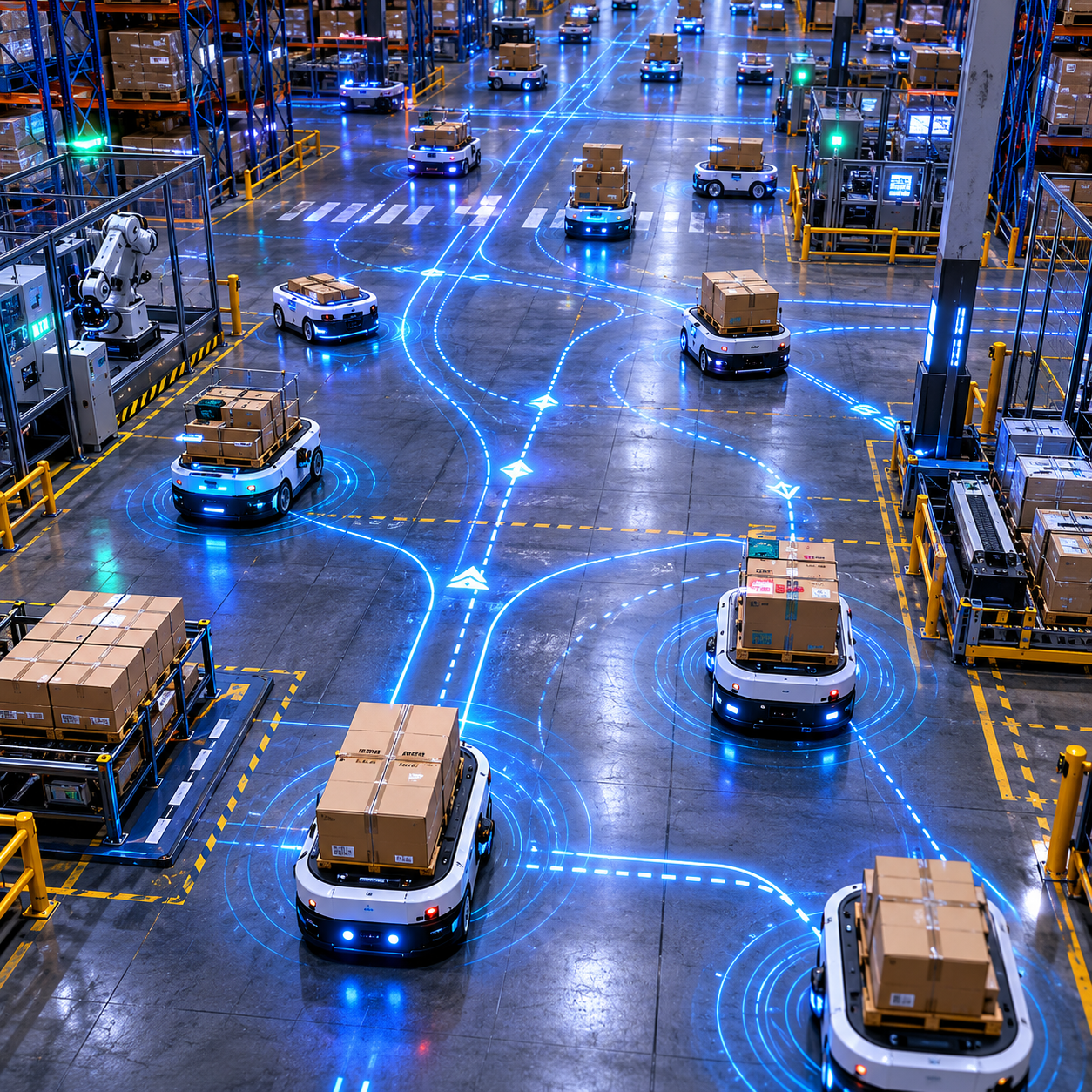
Depending on the application, AMR fleet management systems may communicate with:
- Warehouse Management Systems (WMS)
- Enterprise Resource Planning systems (ERP)
- Manufacturing Execution Systems (MES)
- Inventory management platforms
- Production management software
- Industrial control systems
- Custom enterprise applications
How WMS Integration Works
Consider a warehouse where a pallet must be transported from a storage area to a production line.
Instead of an employee manually requesting a specific robot, the WMS can automatically generate a transportation mission.
The fleet management platform receives the request, evaluates the available AMRs, selects the most appropriate robot, calculates the route, and assigns the mission.
Once the task is completed, the robot or fleet management platform can return the task status to the connected system.
This creates a more connected and automated material-handling workflow.
Managing Different Types of Robots
Industrial facilities may not always use identical robots.
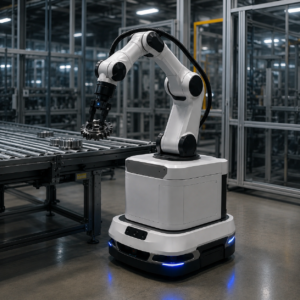
Different tasks may require different payload capacities, dimensions, lifting mechanisms, sensors, or mobility capabilities.
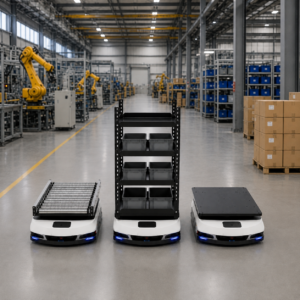
A fleet may include:
- Heavy-duty AMRs
- Compact mobile robots
- Pallet transportation robots
- Inspection robots
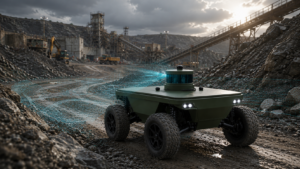
- Outdoor autonomous platforms
- Application-specific robotic systems
Fleet management software can help determine which robotic platform is suitable for each mission based on its capabilities.
Fleet Scalability
One of the major advantages of autonomous mobile robot systems is the ability to scale gradually.
An organization may begin with a small number of robots for a specific material-handling workflow.
As demand increases, additional AMRs can be introduced into the operation.
The fleet management platform then coordinates the expanded fleet without requiring the entire automation architecture to be redesigned.
This approach allows companies to develop automation in phases rather than implementing a large robotic fleet from the beginning.
Real-Time Fleet Monitoring
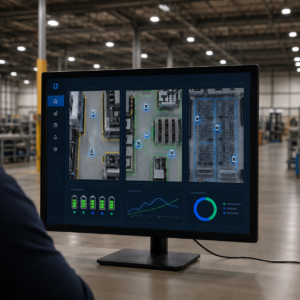
A centralized fleet dashboard can provide operators with real-time visibility into the robotic operation.
Depending on the platform, operators may be able to monitor:
- Live robot positions
- Active missions
- Completed missions
- Robot availability
- Battery status
- Charging activity
- System alerts
- Traffic conditions
- Mission queues
- Fleet utilization
This operational visibility can make robotic systems easier to manage and troubleshoot.
Fleet Analytics and Performance Data
AMR fleet management is not only about controlling robots in real time.
The system can also provide valuable operational data that helps organizations understand how their robotic fleet is performing.
Useful fleet metrics may include:
- Number of completed missions
- Average mission duration
- Robot utilization
- Idle time
- Charging time
- Distance travelled
- Traffic delays
- Robot availability
- Mission failure rates
Analyzing this information can help operators identify bottlenecks and improve automation workflows over time.
What Happens If a Robot Becomes Unavailable?
Industrial automation systems must be able to respond when conditions change.
If one AMR becomes unavailable because of charging, maintenance, an operational issue, or another event, fleet management software can reassign tasks to other available robots.
This provides a level of operational resilience that is difficult to achieve when robots are managed individually.
Priority-Based Task Management
Not every mission has the same level of importance.
For example, a production line that is waiting for a critical component may require faster material delivery than a routine warehouse transfer.
Fleet management software can use task priorities to determine which missions should be completed first.
This allows the robotic fleet to align more closely with real production and logistics requirements.
Benefits of AMR Fleet Management
Businesses implement fleet management systems because coordinated multi-robot automation can provide several operational advantages.
- More efficient robot utilization
- Improved traffic coordination
- Reduced robot idle time
- Better charging management
- Faster material transportation
- More consistent operations
- Real-time fleet visibility
- Improved scalability
- Reduced manual coordination
- Better integration with industrial systems
Industries Using AMR Fleet Management
Multi-robot fleet management can support automation across many industries.
Warehousing and Logistics
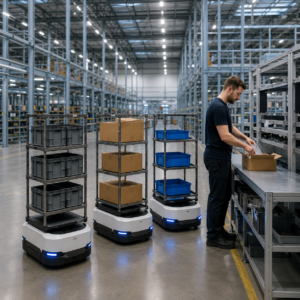
Warehouses and distribution centers can use coordinated AMR fleets for material transportation, order fulfillment support, pallet movement, and internal logistics.
Manufacturing
Manufacturing facilities can use AMR fleets to transport parts, components, tools, raw materials, and finished products between production areas.
Automotive Production
Automotive manufacturing environments often require continuous movement of components between storage locations, assembly lines, and production stations.
Fleet-managed robots can support these high-frequency internal logistics operations.
Electronics Manufacturing
Electronics facilities can use autonomous mobile robots to support controlled transportation between production, storage, testing, and assembly areas.
Pharmaceutical and Healthcare Logistics
Autonomous robotic fleets can support repetitive transportation workflows in pharmaceutical warehouses, laboratories, hospitals, and controlled operational environments.
Smart Factories and Industry 4.0
AMR fleet management can become an important part of a connected Industry 4.0 architecture.
Robots can communicate with enterprise systems, production software, sensors, machines, and other automation technologies.
Instead of functioning as isolated robotic devices, AMRs become connected elements of a larger digital operation.
The Future of Multi-Robot Automation
As artificial intelligence, autonomous navigation, industrial software, and sensing technologies continue to advance, AMR fleet management systems are expected to become increasingly intelligent.
Future fleet systems may use technologies such as:
- AI-driven task allocation
- Predictive traffic management
- Predictive maintenance
- Self-optimizing robot routes
- Cloud-connected fleet management
- Advanced digital twins
- Automated workload prediction
- Multi-site robotic orchestration
Instead of operators manually optimizing the robotic fleet, future platforms may continuously learn from operational data and automatically improve their behavior.
From Individual Robots to Intelligent Fleets
The real value of autonomous robotics becomes more visible when robots operate as part of a connected system.
A single AMR can automate an individual transportation task.
An intelligently managed fleet can automate an entire material flow.
FASTA Robotics and AMR Fleet Management
At FASTA Robotics, autonomous mobility is approached as more than an individual robotic platform.
Industrial automation requires intelligent coordination between robots, software, navigation systems, operational workflows, and existing enterprise infrastructure.
FASTA robotic solutions can support different automation requirements, from internal material transportation and industrial logistics to inspection, outdoor operations, and custom robotic applications.
Depending on the project, robotic platforms can be integrated with centralized fleet management and existing operational systems to create a connected automation architecture.
Choosing the Right AMR Fleet Architecture
Every facility has different requirements.
Before implementing a multi-robot automation system, organizations should evaluate:
- Number of required robots
- Payload requirements
- Facility layout
- Traffic density
- Pickup and delivery locations
- Required mission frequency
- Charging infrastructure
- WMS, ERP, or MES integration
- Robot communication requirements
- Future fleet expansion
A well-designed fleet architecture should consider not only current requirements but also how the operation may scale in the future.
Conclusion
AMR Fleet Management is one of the key technologies behind scalable autonomous mobile robot deployments.
By coordinating task allocation, navigation, traffic, charging, robot availability, and system integration, fleet management software allows multiple autonomous robots to operate together as a unified automation system.
As warehouses, factories, and logistics operations continue adopting autonomous robotics, intelligent fleet coordination will become increasingly important for building efficient and scalable automation environments.
Looking for an AMR Fleet Solution?
Whether your operation requires a small number of autonomous mobile robots or a scalable multi-robot system, the correct fleet architecture depends on your facility, workflow, payload, traffic conditions, and integration requirements.
What is AMR fleet management?
AMR fleet management is a software system that coordinates and monitors multiple autonomous mobile robots within the same operation.
How does fleet management assign tasks to robots?
The system can evaluate factors such as robot location, workload, battery level, task priority, traffic conditions, and robot capabilities before assigning a mission.
Can multiple AMRs operate in the same area?
Yes. Fleet management software can coordinate multiple AMRs by managing routes, intersections, traffic priorities, and task allocation.
Can AMR fleets integrate with WMS or ERP software?
Yes. Depending on the automation architecture, fleet management systems can integrate with WMS, ERP, MES, inventory management, production software, and other enterprise systems.
How are AMR batteries managed?
Fleet management software can monitor battery levels and coordinate charging schedules so that robots can charge without unnecessarily interrupting operations.
Can an AMR fleet be expanded later?
Yes. One of the key advantages of fleet-based autonomous robotics is scalability. Organizations can begin with a smaller robotic deployment and add additional robots as operational requirements grow.
What happens if one robot stops working?
Depending on the system architecture, active or pending tasks can be reassigned to other available robots so that the overall operation can continue.